
Search behaviour is changing faster than ever.
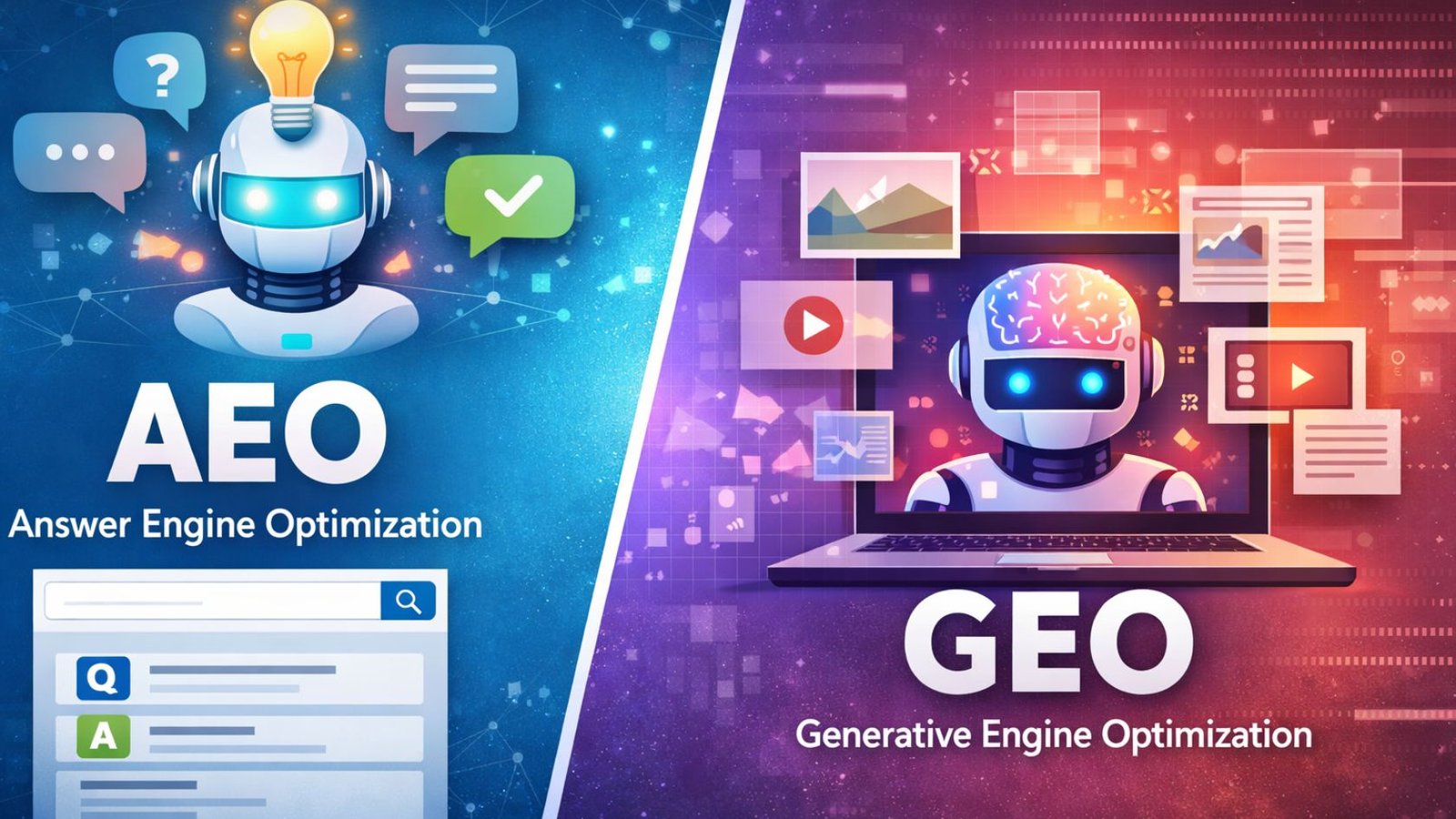
Users are no longer just typing keywords into Google—they are asking full questions, speaking to voice assistants, and interacting with AI-powered tools. This shift has given rise to two important optimization strategies: AEO (Answer Engine Optimization) and GEO (Generative Engine Optimization).
If you’ve been hearing debates around AEO vs GEO, this blog will give you a clear, practical understanding of what each means, how they differ, and why both matter for future-ready SEO.
What Is AEO and GEO?
Before comparing them, let’s understand each concept individually.
What Is AEO (Answer Engine Optimization)?
AEO focuses on optimizing content so it can directly answer user questions on search engines and voice assistants.
The goal of AEO is to:
- Appear in featured snippets
- Rank for “People Also Ask” boxes
- Get selected as a direct spoken answer by voice assistants
AEO is strongly tied to question-based searches and intent-driven content.
What Is GEO (Generative Engine Optimization)?
GEO is a newer concept that focuses on optimizing content for AI-driven generative platforms such as Google SGE, ChatGPT-style interfaces, and other LLM-based search experiences.
Instead of ranking a single blue link, GEO aims to:
- Influence AI-generated answers
- Ensure your brand or content is referenced by AI systems
- Provide structured, authoritative information machines can trust
This is where SEO begins to merge with AI visibility.
AEO vs GEO: Core Difference Explained Simply
The easiest way to understand the difference between AEO and GEO is by looking at who is consuming your content.
- AEO is optimized for users
- GEO is optimized for AI systems
Both are important—but they serve different roles in modern search.
Difference Between AEO and GEO
| Aspect | AEO | GEO |
| Full Form | Answer Engine Optimization | Generative Engine Optimization |
| Focus | Direct answers to user queries | AI-generated responses |
| Target Platforms | Google snippets, voice search | AI search, LLM-based engines |
| Content Style | Question–answer format | Structured, authoritative content |
| Main Goal | Be the best direct answer | Be referenced by AI |
This table summarises the AEO vs GEO comparison in a practical way.
How AEO Works in Real-World SEO

AEO content typically includes:
- Clear questions as headings
- Short, direct answers
- FAQ sections
- Structured data (schema)
For example, “What is AEO and GEO?” is a perfect AEO-style query. Pages that answer clearly and concisely have a higher chance of appearing in featured snippets.
How GEO Fits Into the Future of Search
GEO goes beyond traditional ranking.
AI systems don’t just crawl and index pages – they analyse context, authority, and structure across multiple sources. GEO-ready content:
- Uses clear entity definitions
- Maintains topical depth
- Builds trust signals
- Avoids fluff and duplication
To support GEO, websites also need to communicate clearly with AI systems at a technical level. This is where newer standards come into play, such as LLM.txt.
If you want to understand how websites can guide AI engines more effectively, read this detailed guide: What is LLM.txt and Why Your Website Needs It?
This concept is becoming increasingly relevant in GEO vs AEO discussions.
AEO vs GEO: Do You Need to Choose One?
No – and that’s the key insight most businesses miss.
AEO and GEO are not competitors. They are complementary.
- AEO helps you win today’s search results
- GEO prepares you for AI-driven search experiences
Websites that ignore GEO may rank today but disappear from AI answers tomorrow. Websites that ignore AEO may lose immediate visibility and traffic.
The smartest SEO strategies combine both.
Why Businesses Should Care About AEO and GEO Now
Search engines are evolving from “links” to “answers.”
If your content:
- Doesn’t answer questions clearly → you lose AEO visibility
- Isn’t structured for AI understanding → you lose GEO relevance
Understanding what AEO and GEO are no longer optional – it’s foundational for sustainable SEO growth.
Final Thoughts: AEO vs GEO in One Line
- AEO helps search engines answer users
- GEO helps AI engines understand and trust your content
Together, they shape the future of search visibility.
Need Help Implementing AEO and GEO Strategy?
Modern SEO requires more than keywords and backlinks. It demands strategic content, technical clarity, and AI-ready optimization.
If you’re looking for expert-led SEO marketing in India, working with a team that understands AEO, GEO, and evolving search technologies can give your brand a long-term competitive edge.
The future of SEO is already here – those who adapt early will lead.