
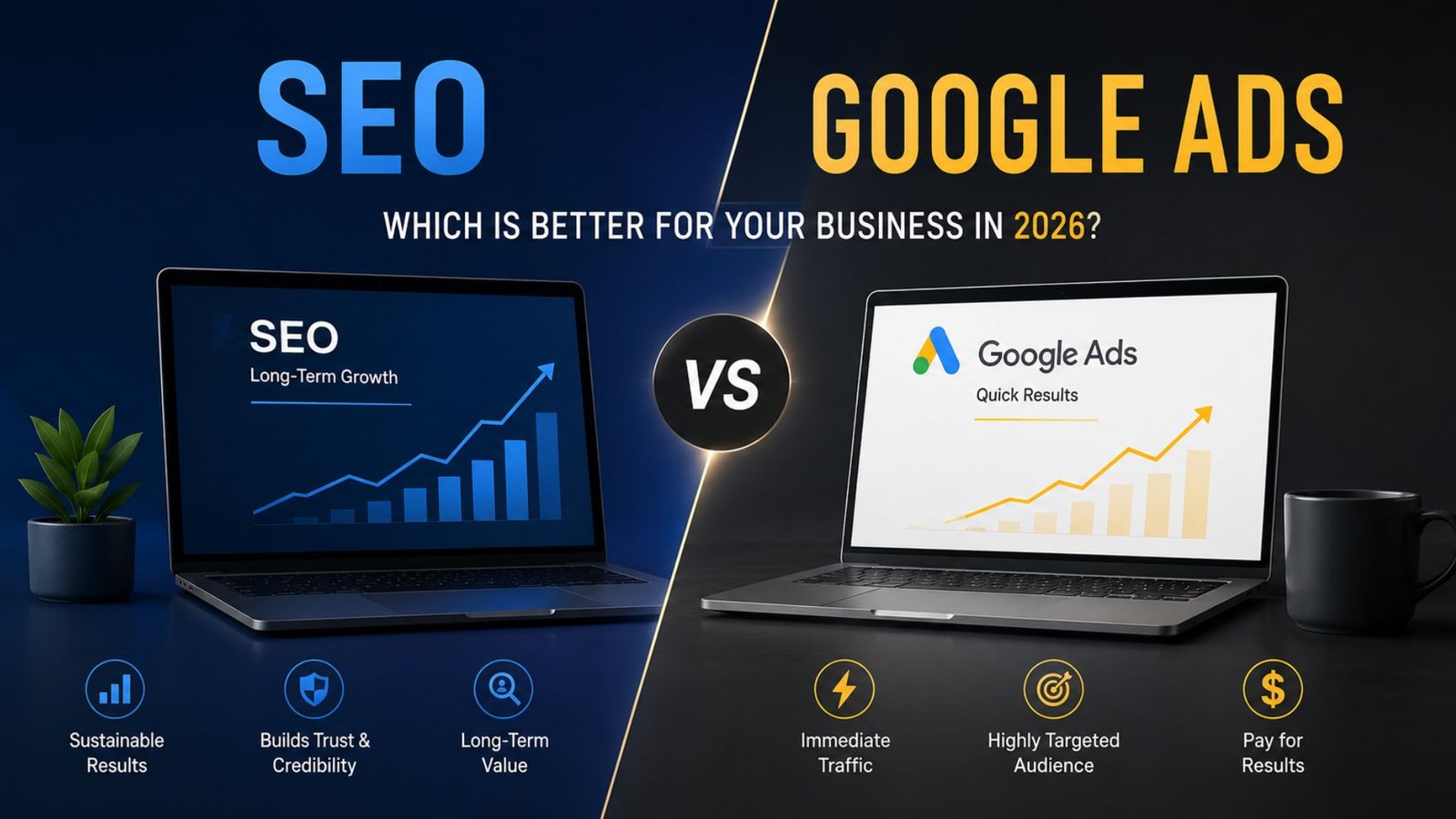
In today’s competitive digital landscape, businesses are constantly searching for effective ways to attract customers online. Two of the most popular strategies are Search Engine Optimization (SEO) and Google Ads. Both can drive traffic, generate leads, and increase sales, but they work in very different ways.
This raises an important question:
Should you invest in SEO, Google Ads, or both?
The answer depends on your budget, business goals, industry competition, and how quickly you need results. Understanding the strengths and limitations of each strategy can help you make a smarter marketing decision in 2026.
Understanding SEO
SEO is the process of improving your website’s visibility in organic search results. Instead of paying for every click, businesses optimize their website content, technical structure, and authority to earn rankings on Google.
When your website ranks for relevant keywords, potential customers can discover your business naturally through search engines.
The main advantage of SEO is that it continues to generate traffic long after the initial work has been completed. While it takes time to build rankings, the long-term benefits can be substantial.
Benefits of SEO
- Long-term traffic growth
- Increased brand credibility
- Higher return on investment over time
- Sustainable lead generation
- Better user experience
- Stronger online authority
However, SEO requires patience. Depending on your industry and competition, it may take several months before meaningful results appear.
Understanding Google Ads
Google Ads is Google’s paid advertising platform that allows businesses to appear at the top of search results almost immediately.
Instead of earning rankings organically, businesses bid on keywords and pay when users click their advertisements.
This makes Google Ads an attractive option for companies that need quick visibility and immediate leads.
Benefits of Google Ads
- Instant website traffic
- Faster lead generation
- Precise audience targeting
- Budget flexibility
- Easy campaign tracking
- Immediate market testing
The biggest drawback is simple: traffic stops when your advertising budget stops.
Unlike SEO, Google Ads does not continue generating visitors once campaigns are paused.
SEO vs Google Ads: The Biggest Difference
The primary difference between SEO and Google Ads comes down to ownership versus rental.
With Google Ads, you are effectively renting visibility. Every click comes at a cost, and your visibility disappears when your budget runs out.
With SEO, you are building a long-term asset. Every optimized page, backlink, and piece of content contributes to future growth.
Businesses looking for immediate results often start with Google Ads, while those focused on long-term growth typically invest heavily in SEO.
SEO vs Google Ads: Speed of Results
When speed matters, Google Ads is the clear winner.
A well-optimized advertising campaign can start generating traffic within hours of launch.
SEO works differently. Search engines need time to crawl, index, and evaluate your content before rankings improve.
Google Ads
- Results within hours or days
- Immediate visibility
- Fast lead generation
SEO
- Results typically take several months
- Builds authority over time
- Generates consistent traffic long-term
If your business needs leads quickly, Google Ads can provide immediate momentum while SEO develops in the background.
Cost Comparison: SEO vs Google Ads
Many business owners assume SEO is free because clicks are not paid for directly.
In reality, SEO requires investment in content creation, technical optimization, link building, and ongoing maintenance.
Google Ads requires a direct advertising budget, with a cost attached to every visitor.
Over a short period, Google Ads may produce faster returns. Over several years, SEO often becomes significantly more cost-effective because rankings continue generating traffic without paying for every click.
Which Strategy Generates Better Leads?
The answer depends on customer intent.
Google Ads often performs well for high-intent searches where users are actively looking to make a purchase.
SEO performs exceptionally well for businesses targeting customers throughout the entire buying journey.
Many consumers research products, compare solutions, read guides, and gather information before making a purchasing decision.
This is where SEO shines.
Businesses that consistently publish valuable content can capture potential customers at every stage of the decision-making process.
If you’re unsure which keywords your audience is searching for, learning how to identify emerging search trends can help shape a stronger content strategy. Our guide on trending keywords for SEO explains practical ways to discover opportunities before your competitors do.
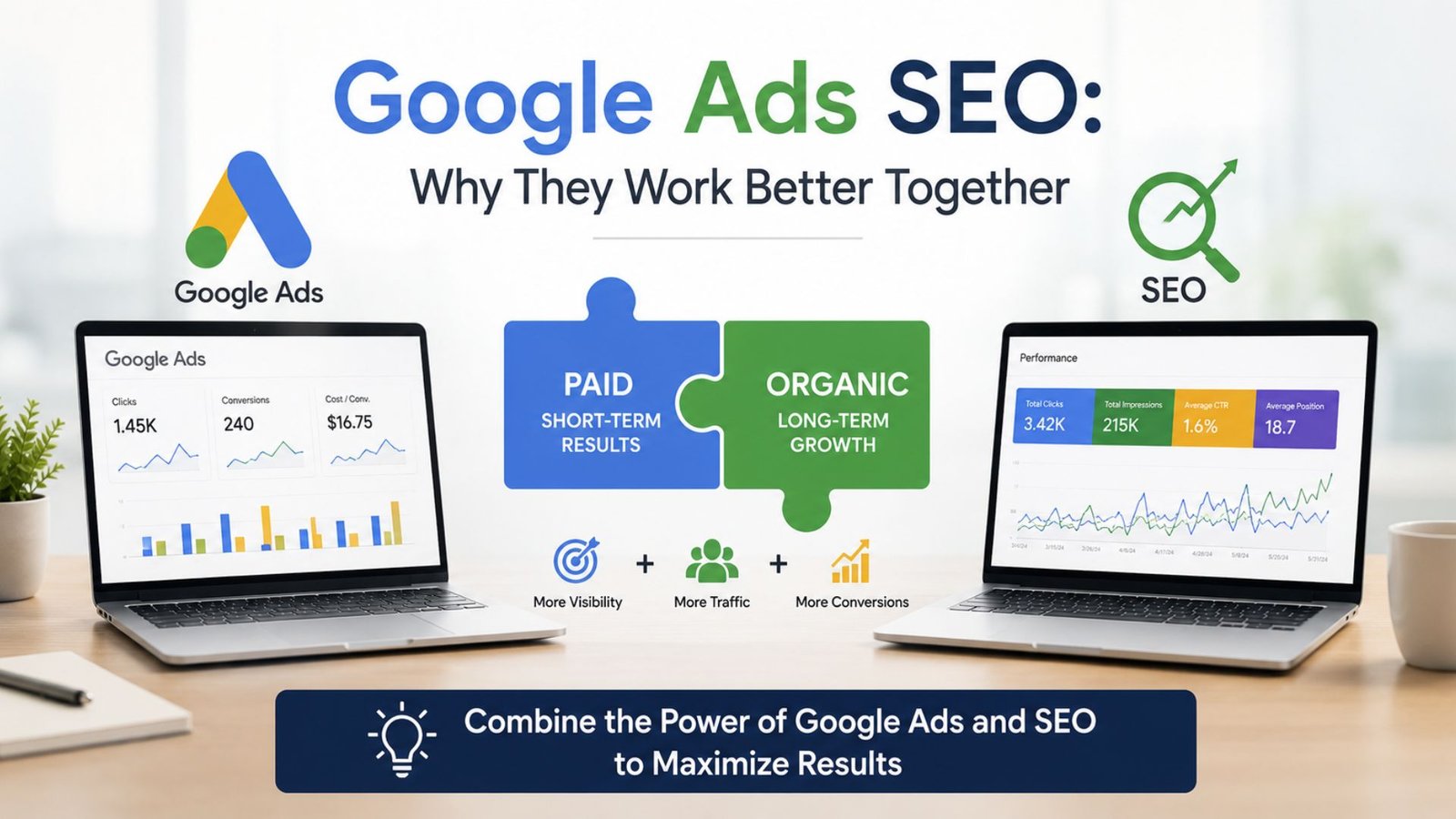
Google Ads SEO: Why They Work Better Together
Many marketers treat SEO and Google Ads as competing strategies.
In reality, they often work best when combined.
Google Ads can generate immediate traffic while SEO builds long-term authority.
For example:
- Google Ads drives quick leads.
- SEO builds sustainable organic traffic.
- Google Ads helps test keyword performance.
- SEO reduces future acquisition costs.
- Together, they increase search visibility.
Businesses that combine both channels often create a stronger and more resilient digital marketing strategy.
When Should You Choose SEO?
SEO is often the better investment when:
- You want sustainable growth.
- You have a long-term marketing strategy.
- You want to reduce dependency on paid advertising.
- You publish content regularly.
- Your industry has strong search demand.
Companies that view their website as a long-term business asset typically benefit greatly from SEO.
When Should You Choose Google Ads?
Google Ads is often the better option when:
- You need leads immediately.
- You’re launching a new business.
- You want rapid visibility.
- You’re promoting seasonal offers.
- You need to test new products or services quickly.
For many businesses, Google Ads serves as a short-term growth engine while SEO develops into a long-term traffic source.
The Smartest Approach in 2026
The debate should not always be SEO versus Google Ads.
Instead, businesses should ask:
How can SEO and Google Ads work together to achieve our goals?
A balanced strategy allows businesses to capture immediate opportunities through paid advertising while simultaneously building long-term organic visibility.
This approach reduces risk, improves brand visibility, and creates multiple channels for customer acquisition.
Conclusion
SEO and Google Ads each have unique advantages. Google Ads delivers immediate visibility and faster lead generation, while SEO provides long-term growth, credibility, and sustainable traffic.
For businesses focused on building a strong online presence in 2026, the most effective strategy is often a combination of both. Google Ads can provide immediate results, while SEO creates a foundation for lasting success.
If you’re looking for professional SEO services in India, investing in a well-planned SEO strategy can help your business achieve consistent organic growth while reducing long-term dependence on paid advertising. Combined with the right Google Ads campaigns, SEO can become one of the most valuable digital marketing investments your business makes.
Frequently Asked Questions
Which industries benefit the most from SEO?
Industries with consistent search demand, such as healthcare, legal services, real estate, eCommerce, and home services, often see significant benefits from SEO due to ongoing organic traffic opportunities.
Can Google Ads help a new website get customers?
Yes. Since new websites typically have little organic visibility, Google Ads can help attract visitors and generate leads while the website builds authority through SEO.
What happens when I stop running Google Ads?
Your ads will stop appearing in search results, and paid traffic will typically cease immediately. This is why many businesses also invest in SEO for long-term visibility.
Can local businesses use both SEO and Google Ads?
Absolutely. Local SEO helps businesses appear in local search results and map listings, while Google Ads can increase visibility for highly competitive local keywords.
What metrics should I track for SEO and Google Ads?
For SEO, monitor organic traffic, keyword rankings, and conversions. For Google Ads, focus on click-through rate (CTR), cost per click (CPC), conversion rate, and return on ad spend (ROAS).
Can SEO reduce my Google Ads spending over time?
Yes. As your website gains organic rankings and attracts more unpaid traffic, you may be able to reduce advertising spend on certain keywords while maintaining lead generation and visibility. This is one reason many businesses invest in SEO alongside paid advertising.