
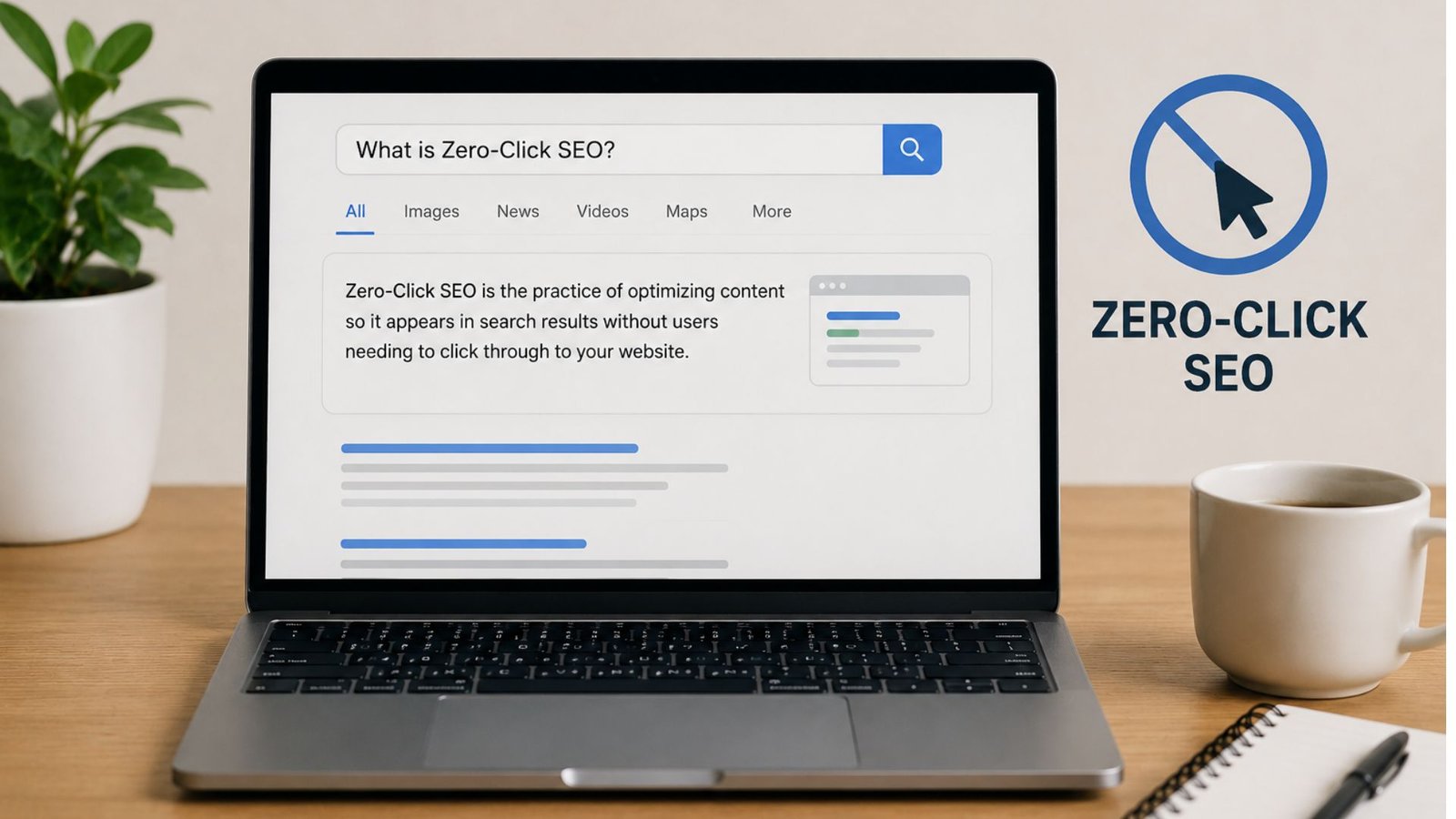
Have you ever Googled something, found your answer right there on the results page, and never actually clicked on a website? That moment — search, answer, done — is exactly what the SEO world is talking about when it brings up “zero-click search.” And if you run a website or manage SEO for a business, this shift is one you genuinely need to understand, because it’s quietly changing how traffic works.
This guide breaks it down in the simplest way possible: what zero-click search actually means, why it’s happening, how it affects your traffic, and what you can start doing about it today.
What Is a Zero-Click Search?
A zero-click search happens when someone types a query into Google, gets their answer directly on the search results page, and leaves without visiting any website. Try searching something like “how many grams in a cup” or “is the post office open today” — the answer shows up instantly at the top, and there’s rarely a reason to click any further.
That answer might come from a featured snippet, a quick definition box, a People Also Ask result, or more recently, an AI-generated summary. Some people call this a “click-less search” instead — different name, same idea: the search happened, the need was met, and no click ever followed.
Why Are Zero-Click Google Searches Increasing?
This didn’t happen overnight. Google has been adding more answer-first features to its results pages for years — definitions, calculators, local business info, “People Also Ask” boxes, and featured snippets. Each one was designed to answer simple questions faster, right where the user already is.
The bigger jump recently has come from AI. AI Overviews and AI-generated summaries can now pull information from multiple sources and present a complete answer directly on the page. For a large share of everyday questions, users simply don’t need to click anywhere else anymore.
Zero Click Searches vs Organic Traffic: What’s the Real Difference?
This is where a lot of beginners get confused, so let’s separate the two clearly.
- Organic traffic refers to visitors who land on your website through unpaid search results — they searched, clicked, and arrived on your page.
- Zero-click searches are queries where the user gets their answer without clicking anything at all.
When you compare zero-click searches vs organic traffic, the key takeaway is this: rankings and impressions can keep growing, while actual website visits stay flat or even dip. Your content might still be doing its job — informing, building trust, getting seen — it’s just not always converting into a click anymore.
The Impact of Zero-Click Searches on Websites
The impact of zero-click searches on websites shows up in a few specific ways:
- Lower click-through rates, even when rankings improve
- Traffic plateaus, despite growing impressions in Search Console
- Reduced visits for simple, high-volume queries like definitions or quick facts
- A shift in value from “clicks” to “visibility and brand recall”
This doesn’t mean SEO has stopped working. It means the scoreboard has changed, and websites that only track clicks are missing half the picture.
How to Optimize for Zero-Click Searches
If you’re wondering how to optimize for zero-click searches, here’s where to start:
1. Target keywords with real intent: Skip overly simple queries that Google can answer in one line. Focus on comparisons, “how-to” questions, and topics where users genuinely need more than a quick definition.
2. Answer clearly and early: Put your core answer near the top of the page, in plain language. This helps you get picked up by featured snippets and AI summaries, while still giving readers a reason to scroll further.
3. Use clean formatting: Short paragraphs, bullet points, clear headings, and FAQ sections make your content easier for both readers and search engines to scan and extract.
4. Add depth after the quick answer: Examples, data, checklists, and practical detail give people a reason to stay on your page instead of bouncing back to the results.
5. Use schema markup: Structured data helps Google understand what your content is — an FAQ, a how-to, a review — which improves your chances of showing up in rich results.
A Simple Zero-Click Search Strategy for Beginners
If all of this feels like a lot, here’s a simple zero-click search strategy you can start with:
- Audit your top pages and check which ones already appear in featured snippets or AI Overviews.
- Identify keywords where you rank well but get surprisingly low clicks — these are your zero-click opportunities.
- Restructure those pages with clearer answers, FAQs, and better formatting.
- Track more than clicks: watch impressions, snippet appearances, and branded search growth over time.
- Repeat this process quarterly as search results keep evolving.
How to Rank in Zero-Click Search Results
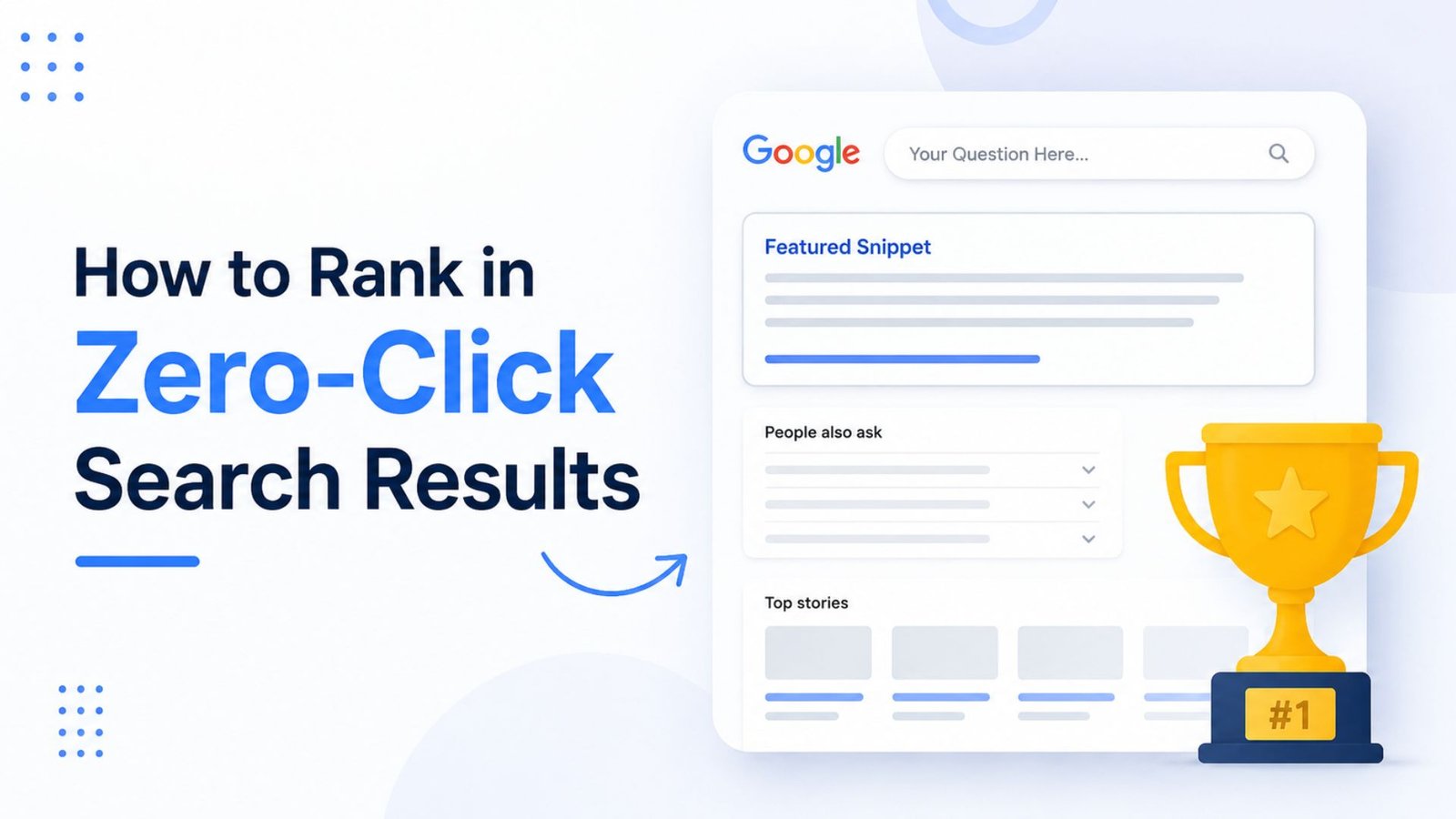
Wondering how to rank in zero-click search results specifically? Featured snippets and AI Overviews tend to favour:
- Pages that answer a question directly within the first few lines
- Content using question-based headings that match how people actually search
- Numbered steps or bullet lists for process-based queries
- Pages with strong topical depth, not just a single shallow article
- Sites with consistent, trustworthy brand signals across the web
None of this guarantees a spot, but it puts you in a much stronger position to be picked up.
Beyond Zero-Click: Where Search Is Really Heading
Zero-click search is really just one part of a bigger shift — search engines and AI tools are increasingly answering questions directly instead of just listing links. As this trend grows, it’s worth understanding the difference between optimizing for traditional answer boxes and optimizing for AI-driven engines like ChatGPT or Perplexity. We’ve broken this down in detail in our guide on the difference between answer engine optimization and generative engine optimization, which is a natural next step once you’ve got the zero-click basics down.
Final Thoughts
Zero-click search isn’t a sign that SEO is dying — it’s a sign that SEO is maturing. Clicks still matter, but they’re no longer the only thing worth measuring. Visibility, trust, and being the source search engines and AI tools choose to cite are quickly becoming just as valuable.
If figuring out how to balance traditional rankings with this newer, answer-first version of search feels overwhelming, that’s exactly the kind of strategy a good SEO partner can help you build. As a results-focused SEO agency in India, we help businesses adapt their content and SEO strategy for both classic search rankings and the zero-click, AI-driven results pages of today — so you stay visible no matter how someone finds you.
Frequently Asked Questions
How are zero-click searches different from regular organic traffic?
Organic traffic counts actual visits to your site from search. Zero-click searches end on the results page itself, so your content can be seen and valued without ever generating a visit.
Do zero-click searches hurt my website’s traffic?
They can reduce clicks for simple, fact-based queries. But they don’t eliminate the value of SEO — visibility, brand recall, and trust still build up even without a click.
Is zero-click search the same as AI Overviews?
Not exactly. AI Overviews are one cause of zero-click search, but the term also includes featured snippets, People Also Ask boxes, knowledge panels, and other SERP features that answer queries directly.